
How Startups Earn Trust in a Single Sentence
Big companies get trust for free. Startups don’t.
If you don’t have a brand, you earn trust in one sentence. Your value proposition.
If that sentence is weak:
People don’t click.
They don’t stay.
They don’t buy.
A strong value proposition shows customers you understand what they want and why it matters. That builds trust and attention.
But most startups either guess, get caught up in taglines, or focus on product features.
This post will show you how to craft, and test, a value proposition that actually wins early sales.
What is a value proposition?
A value proposition answers one question:
“What do I get?”
It is not a tagline.
Nike’s “Just Do It” is memorable, but it doesn’t tell you what you get from wearing Nike.
When you have time and a big marketing budget it can be effective. But a startup doesn’t have those things.
It needs to sell now. It needs a value proposition.
A good value proposition clearly states the end outcome.
It communicates:
The gain you create
The pain you relieve
And why it’s worth paying attention
At its core, a value proposition says: “We understand what you’re trying to do and we can help.”
“Value propositions are not trickery, they’re a chance to cut to the chase and give people what they really want.”
Why value propositions matter
If your value proposition is unclear, everything downstream suffers.
1 - It builds trust
Customers make split-second decisions:
Click or bounce
Stay or leave
Listen or tune out
A clear value proposition shows empathy. Empathy builds trust. Trust drives action.
Without it, you’re invisible.
2 - It guides product and design
When your team understands the outcome you’re delivering, decisions get easier.
Features get prioritized. Unnecessary work gets cut. Design becomes intentional.
A strong value proposition saves time and money because it eliminates confusion.
3 - It aligns the team
Startups drift when teams interpret value differently.
A clear value proposition forces alignment:
Sales conversations
Landing pages
Product decisions
Marketing messages
One sentence. Shared clarity.
The four qualities of a strong value proposition
1 - Simple
10–14 words about the end outcome for the customer or user.
If it takes a paragraph to explain, it’s not clear yet.
Google Drive: Easy and secure access to all of your content.
It states the end outcome in only 9 words while addressing the top objection: security.

2 - Empathetic
It speaks the customer’s language. Which means you need a crystal clear picture of who your customer is, what they are looking for, what is getting in the way, and how they talk about it.
Clue (period tracking app): Never be surprised by your period again.
That sentence captures frustration and relief in one line.

3 - Unique
If your competitor could say the same sentence, it’s not strong enough.
What are your customers doing or using today?
How are you different? Why are you worth paying attention to?
Waze: Get the best route in real time with help from fellow drivers.
When Waze started, crowd-sourcing road conditions in real time was the uniqueness.

4 - Valued
Saving time or money isn’t enough.
Make an emotional connection.
What do you allow the customer to do or become?
Goodbudget: Budget with a why — spend, save, and give toward what’s important in life.
The value isn’t budgeting. It’s aligning money with meaning.

Here are some additional examples of great value propositions. Take a look at how they incorporate the four qualities.
Common mistakes
Writing it in a bubble
The best value propositions are not from flipping open the laptop and typing.
They are discovered and crafted through your customer.
Interviews. Observation. Open-ended conversations.
You’re trying to understand:
What they want
What’s in the way
What words your customer uses
Summarizing the product
Don’t talk about the technology or features. Talk about the outcome.
This is wrong: A wearable for your workforce that provides real-time fatigue data.
This is better: Know where fatigue risks are before work starts.
Outcomes > Features.
Using comparative words
“Faster.”
“Better.”
“More effective.”
These are vague and forgettable.
Compare:
A faster way to find a date.
vs.
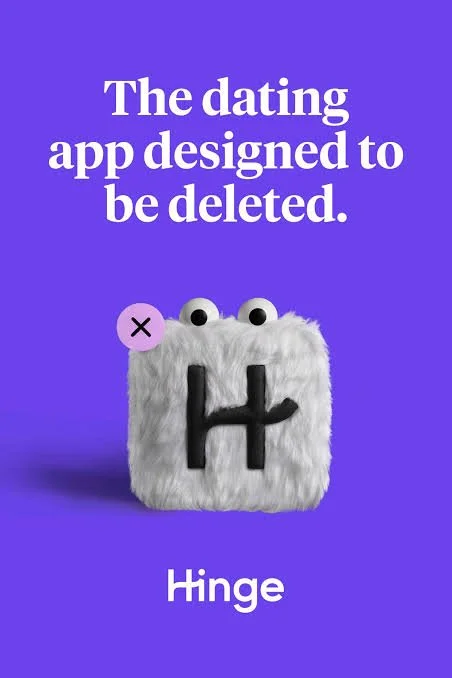
Hinge: The dating app designed to be deleted.
Clarity wins.
Making exaggerated claims
“Best in the world.”
Customers don’t believe it. And startups don’t have the trust to make that claim.
Specific beats hyperbolic.
How to test a value proposition
There are three ways to test.
1 - Conversations
Share your value proposition with people who fit the profile of your target customer but haven’t heard of you.
Ask them what they think the benefits are. What are their concerns? How clear it is?
When it’s a conversation you are able to get two-way feedback on what is working and what isn’t.
2 - Clicks
Run ads. Build landing pages.
Test different value propositions to see which gets the most clicks, engagements, conversions.
Measure through actions and not opinions.
You lose the feedback at this stage but get stronger evidence.
3 - Commitment
The real test is the offer. It is asking for the sale.
An offer combines:
The value proposition
The price
A demo of the solution
If people pay, your value proposition works. If they hesitate, something is unclear.
An offer is a promise of value built on trust through the value proposition and demo of the solution. For the startup to grow, it actually needs to make good on that promise.